
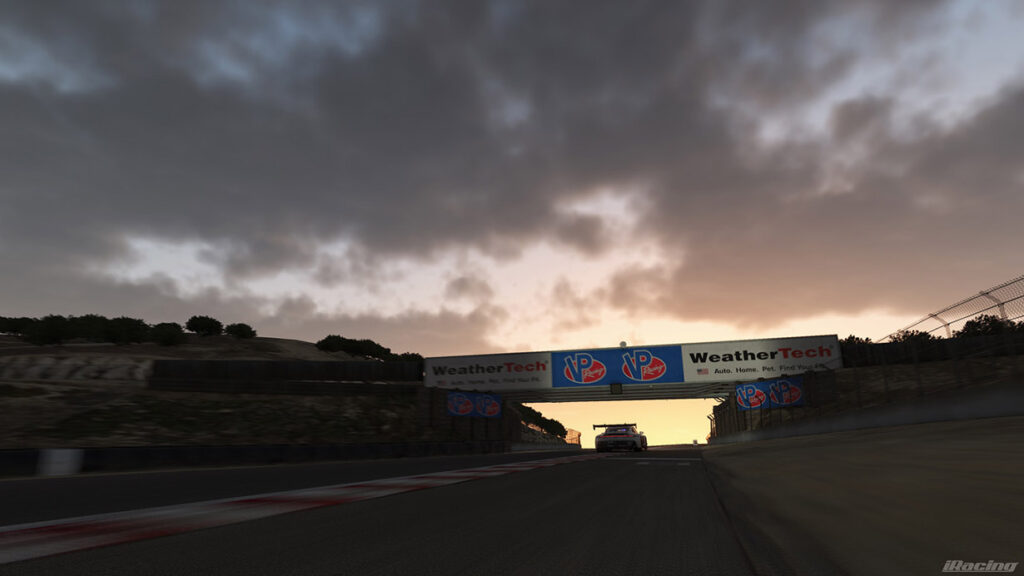

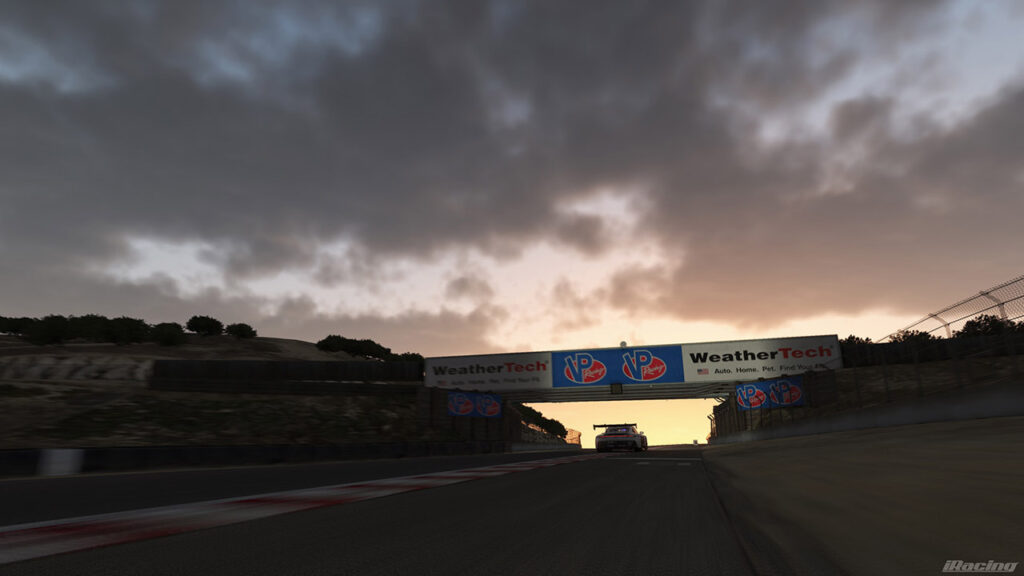
iRacing has revealed the first details of its Season 3 2026 update and the list of additions is impressive. Between new cars, completely rebuilt tracks, brand-new tools for drivers and major advances in simulator technology, this update promises to be much more than a simple content refresh.
While new content naturally grabs the headlines, it is the evolution of the simulator’s systems, interface and technical infrastructure that clearly demonstrates the direction iRacing intends to follow in the coming years.
New Cars Arrive Across Multiple Categories
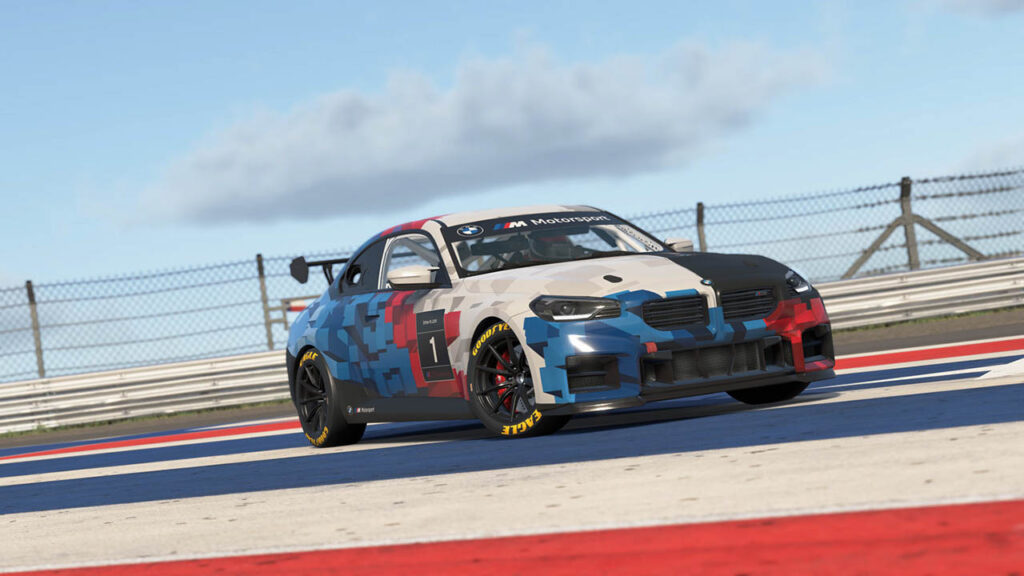
The biggest addition among the new vehicles is the BMW M2 Racing, successor to the popular BMW M2 CS Racing. The new G87 generation arrives with a completely redesigned appearance, including a new digital cockpit, and will continue to be available free of charge to all simulator users.
Another highly anticipated debut is the EuroNASCAR RC01, the result of the recently announced partnership between iRacing and EuroNASCAR. Powered by a naturally aspirated V8 engine and designed for mixed circuit competition, the car promises to offer a unique experience between the worlds of oval and road racing.
Formula Vee fans will also have plenty to celebrate. The category will receive two new optional models that will join the original Formula Vee, offering greater variety without altering the experience already enjoyed by current users.
Meanwhile, in the prototype category, the BMW M Hybrid V8 Evo will be provided free of charge to all owners of the current version, updating the car to the latest GTP specifications.
Laguna Seca Reborn and a New NASCAR Circuit Arrives
On the track side, one of the biggest highlights is the complete reconstruction of WeatherTech Raceway Laguna Seca.
Although the circuit has received graphical updates over the years, this marks the first time since iRacing’s launch that the track surface itself has been rescanned and rebuilt from scratch using the latest photogrammetry technologies. The result should deliver an unprecedented level of detail and accuracy at one of the most iconic circuits in world motorsport.
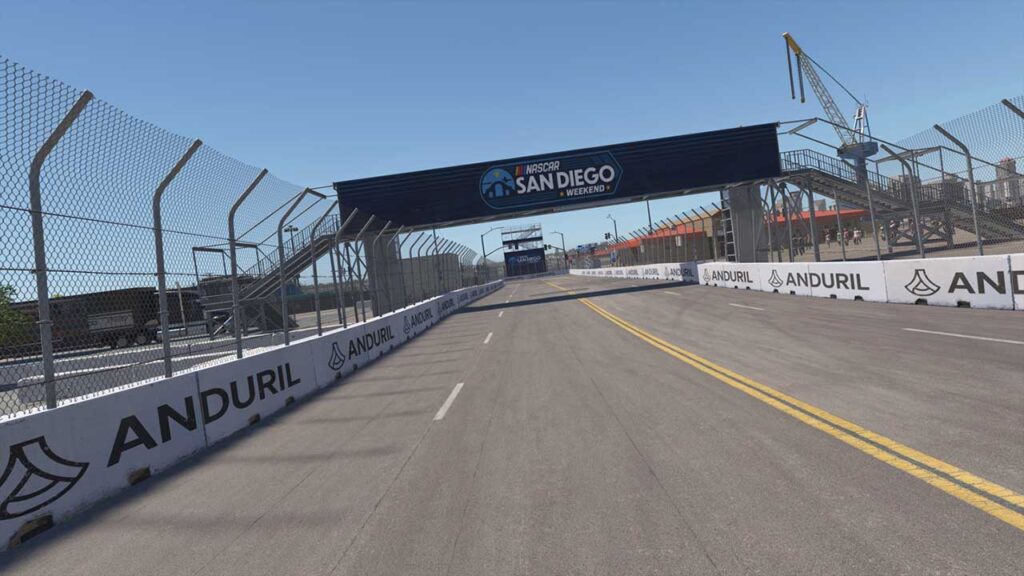
The update also introduces Qualcomm Circuit, located at Naval Base Coronado in San Diego. Developed in collaboration with NASCAR, the venue will arrive in the simulator before the real-world event even takes place, something only such a close partnership between the simulator and the championship could make possible.
In addition, Oschersleben, Magny-Cours, Oran Park and Chicagoland Speedway all receive significant visual and physical upgrades.
A New Generation of Tools for Drivers
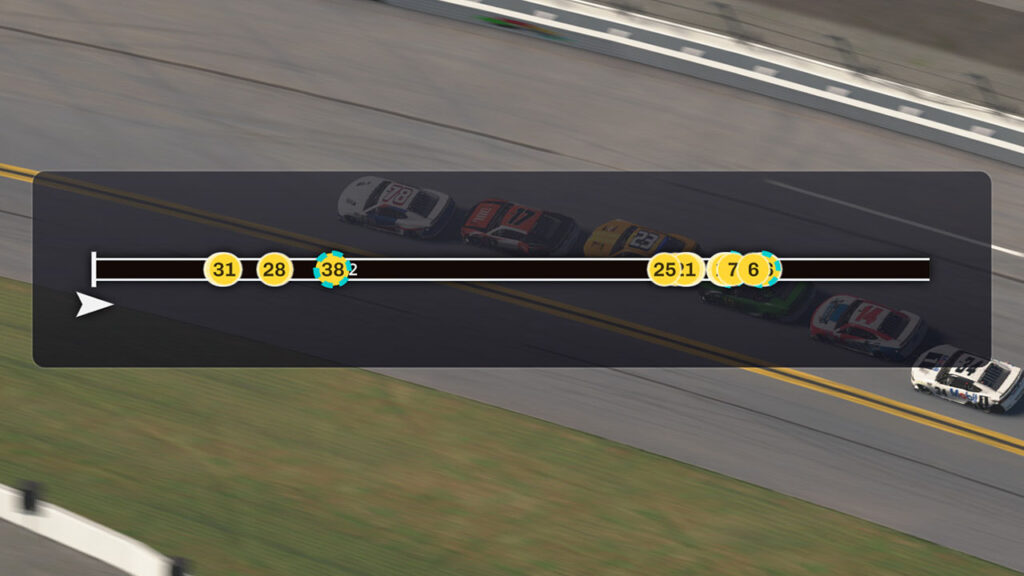
Perhaps the biggest revolution of Season 3 lies within the new Sim UI.
The headline feature is the arrival of dynamic real-time track maps, which now display the position of opponents through several visualisation modes inspired directly by the tools used by professional motorsport teams. Users will be able to choose between Track Map, Radial Map, Linear Map and Mini Map.
Another long-awaited addition is the introduction of an integrated Fuel Calculator. Until now, many drivers relied on external applications to manage fuel strategy, something that will no longer be necessary thanks to this new native feature.
iRacing is also introducing Control Profiles, allowing users to save and manage different wheel and peripheral configurations without the need to manually manipulate external files, significantly simplifying life for those who use multiple hardware setups.
Race Control Takes a Major Step Toward Realism
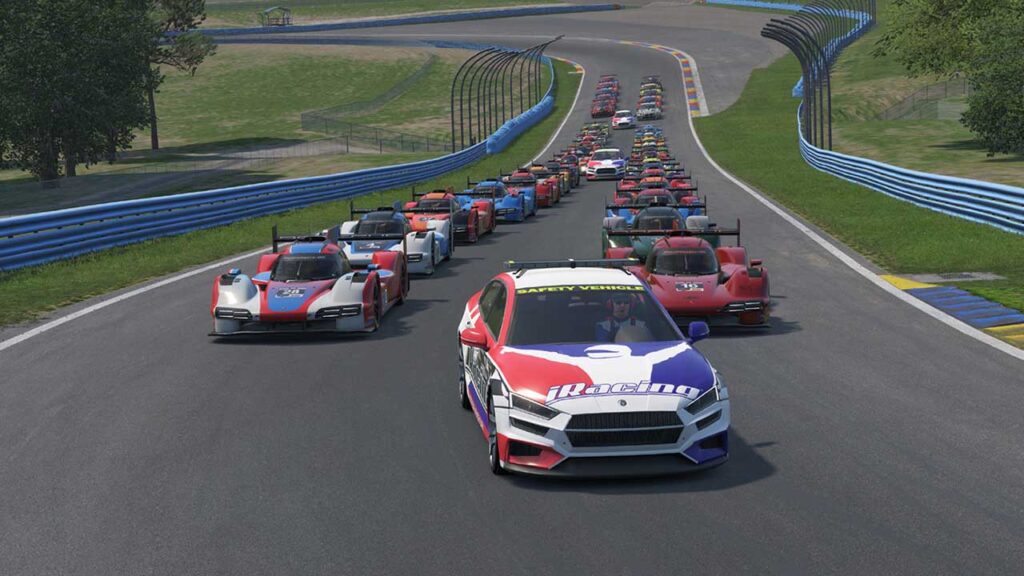
Among the most relevant Season 3 additions is the continued evolution of the Race Control system, an area that could have a significant impact on iRacing’s multiclass racing.
The first confirmed change is a complete redesign of the way the simulator enforces pit road speed limits. The new system was developed to provide more consistent and predictable penalty enforcement, allowing drivers to use the pit speed limiter more efficiently without having to manually search for small time gains through throttle management.
According to the iRacing team, the goal is to keep each car as close as possible to the legal pit road speed limit, reducing discrepancies and making the experience fairer for all participants. Although some more powerful cars may show small visual speed oscillations due to drivetrain characteristics, these should not result in penalties as long as the average speed remains within the defined limits.
Even more interesting is the potential launch of a new multiclass start system with independent pace cars for each class. Although the feature is still in the final testing phase and may not arrive immediately with Season 3, the project is very close to completion.
If implemented, each category will have its own pace car, with staggered releases for the different groups and independent green flags for each class. In practice, this should eliminate much of the confusion that can currently appear in multiclass starts, especially in endurance races and championships such as IMSA or special events.
For many drivers, this could become one of the most important improvements of recent years, not only because of cleaner and better organized starts, but also because of the significant increase in realism and authenticity in race procedures. The system also opens the door to future Race Control evolutions and to the implementation of new procedures inspired directly by real-world motorsport.
Dirt AI Finally Becomes Reality
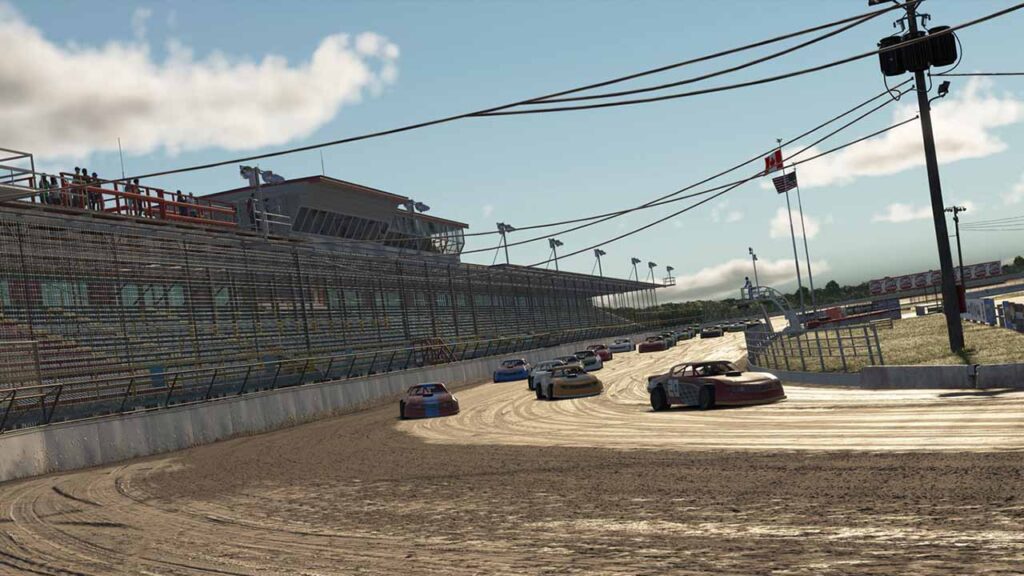
After years of development, iRacing will finally combine its artificial intelligence systems with dirt racing.
A chegada do Dirt AI permitirá disputar corridas contra adversários controlados pelo computador em categorias Dirt Oval, começando inicialmente com os Dirt Legends Ford ’34 Coupe e Dirt Street Stock.
The feature will be accompanied by the introduction of AI Heat Racing, allowing players to recreate more realistic racing events with qualifying heats before the main races.
Network, Physics and Multi-Class Racing Improvements
Technical development also continues to advance on multiple fronts.
The implementation of Anycast technology promises to reduce latency, improve stability and minimise packet loss through more efficient routing paths to race servers.
At the same time, the team continues to develop major improvements to the physics model, including multi-thread optimisations that could dramatically reduce processor usage during races featuring large grids.
Testing also continues for the future implementation of independent pace cars for each class in multiclass racing, a feature that has been requested by the community for many years.
Career Mode and New Graphics Engine Continue to Progress
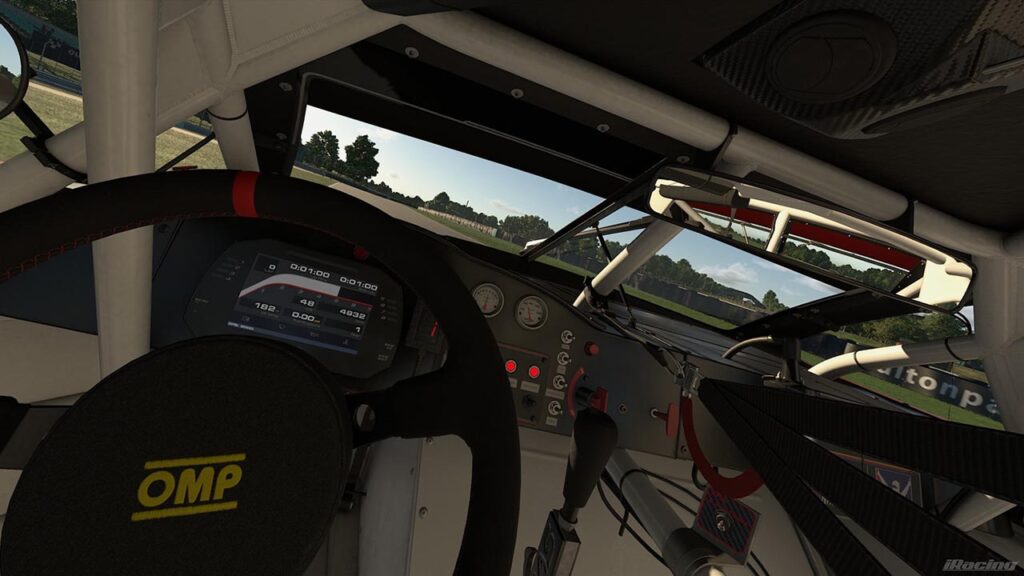
The future of the simulator was also a major focus of this presentation.
Career Mode remains in development and promises to deliver a completely new single-player experience, allowing drivers to build a career path from grassroots categories all the way to the highest levels of world motorsport.
Meanwhile, the new Graphics Engine continues to move closer to implementation. According to the iRacing team, the visual and performance gains are expected to represent a significant transformation in the overall simulator experience.
An Update That Shows the Future of iRacing
The arrival of new cars and tracks will certainly be enough to excite many drivers, but the true importance of Season 3 appears to lie elsewhere.
The integration of new native tools, advances in artificial intelligence, network improvements, the evolution of the physics engine and the progress of ambitious projects such as Career Mode and the new Graphics Engine demonstrate that iRacing continues to invest heavily in the evolution of its platform.
If everything goes according to plan, Season 3 could be remembered as one of the most important updates in the simulator’s recent history.