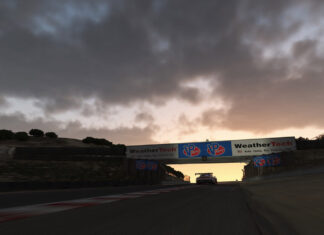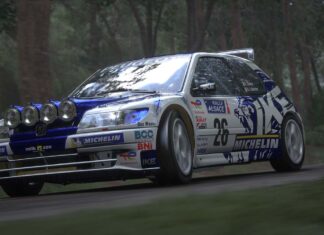












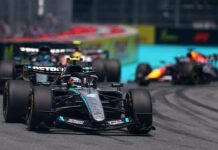







The upcoming “Spark” graphics engine represents one of the most significant transformations in iRacing’s history, with the potential to redefine not only how the simulator looks, but how it is experienced and used by its global community.
Rather than adopting an off-the-shelf solution, iRacing has chosen to build its engine in-house, tailored specifically to the demands of competitive sim racing. This decision underlines the ambition behind Spark: it is not just about visual modernization, but about rebuilding the technological foundation of the platform for the years ahead.
The most immediate impact is expected in lighting. The current engine, while functional, shows clear limitations in dynamic conditions, particularly in night racing. Spark aims to address this with a more advanced and realistic lighting system, fundamentally transforming endurance racing scenarios where day-to-night transitions are critical.

However, the true potential of the new engine lies beyond visuals. A key objective is to improve efficiency by shifting workload from the CPU to the GPU. In practical terms, this could deliver smoother performance, especially in demanding setups such as virtual reality or multi-screen configurations — areas where iRacing has traditionally faced constraints.
This technical evolution may also influence competitiveness. In a simulation where every millisecond matters, stability and consistency are essential. By optimizing resource management, Spark could reduce performance fluctuations and help create a more level playing field across different hardware setups.
Another crucial aspect is longevity. A more modern and scalable engine gives iRacing the flexibility to evolve over time without requiring disruptive overhauls. This is particularly important in an ecosystem built around continuity, where content, leagues and communities develop over the long term.
That said, the success of Spark will depend on its implementation. The transition must be carefully managed to preserve the stability that has long been a cornerstone of iRacing. More than visual impact, the new engine must maintain — or improve — the consistency that defines the simulator.
If it delivers on its promise, Spark could mark a true turning point — not just a graphical upgrade, but a structural evolution capable of elevating iRacing to a new level within the global sim racing landscape.