

















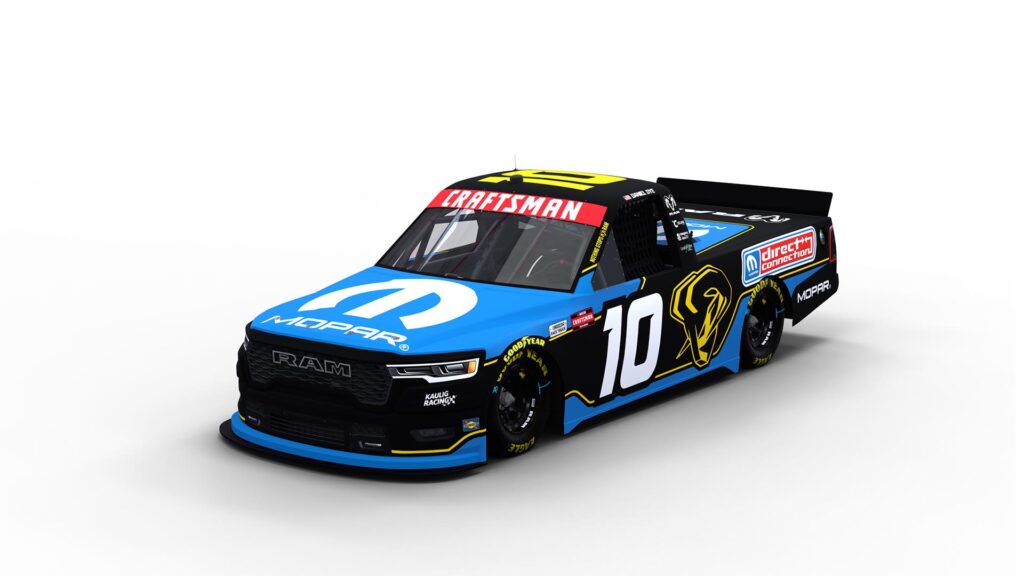
The 2026 NASCAR CRAFTSMAN Truck Series season marks the return of RAM to the grid, bringing the number of manufacturers back to four. More than a symbolic comeback, this is a structured project with medium-term ambitions, though still very much in its early development phase.
After more than a decade away, RAM returns as an official manufacturer, partnering with Kaulig Racing as the cornerstone of its program.
This move strengthens the championship, adding diversity and introducing new competitive dynamics. However, as expected for a new entry, immediate results have yet to match those of the established manufacturers.
Kaulig Racing leads the project structure
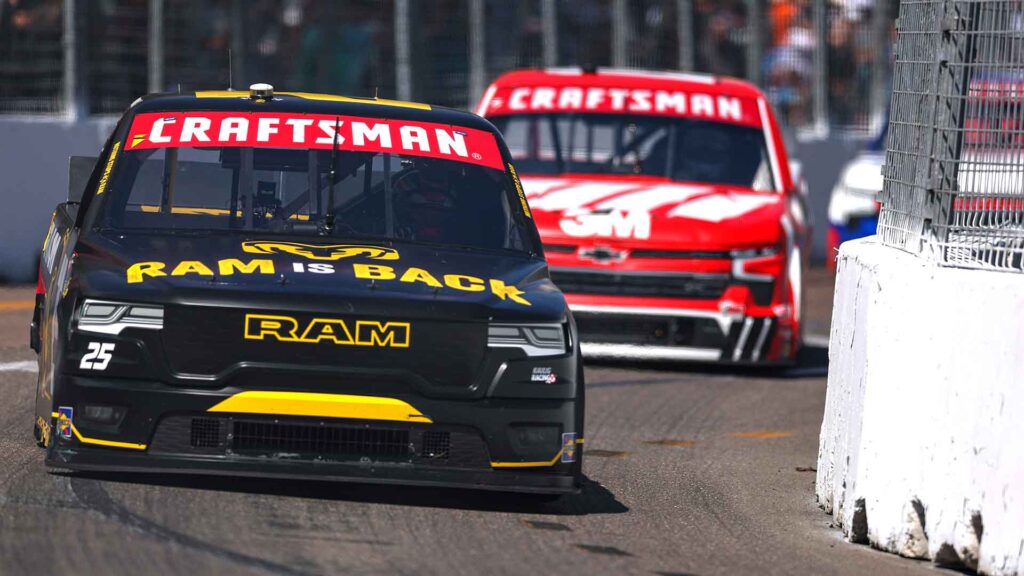
The RAM program is primarily built around Kaulig Racing, which acts as the de facto factory team responsible for development and on-track execution.
The team operates an innovative model, featuring multiple entries and a rotating driver lineup through a “Free Agent Program,” allowing different drivers to compete throughout the season.
Key names linked to the program include:
- Brenden Queen — full-time driver and one of the main prospects
- Daniel Dye — regular presence in the lineup
- Tony Stewart — special appearance early in the season
- additional rotating drivers within the development structure
This approach allows RAM to accelerate evaluation and development, though it also introduces a level of competitive inconsistency typical of new programs.
Performance and results: early signs of progress
From a competitive standpoint, RAM’s season has shown gradual improvement, but without consistent top-level results so far.
In the opening races, including Daytona, the trucks displayed flashes of competitiveness, particularly in certain race phases, but struggled to maintain performance over full race distances.
The best results to date have been within the top-10 , which is considered a positive benchmark for a debut season. However, podiums and wins remain out of reach at this stage.

The primary focus for 2026 is clear:
- accumulate track time
- gather data
- refine the technical package
The expectation within the project is not immediate success, but rather building a solid foundation for future competitiveness.
Impact on the grid: a new competitive variable
RAM’s arrival introduces a new variable into the Truck Series landscape. Even without immediate results, the presence of a fourth manufacturer forces Chevrolet, Ford and Toyota to account for a new competitor in their development strategies.
For the championship, this means:
- increased technical diversity
- new opportunities for mid-tier teams
- renewed media and fan interest
It also reinforces the Truck Series as a relevant platform for manufacturers, something that had not been as evident in recent years.
RAM Truck: technical overview and identity

From a technical perspective, the RAM Truck follows the standardized NASCAR framework, with a common chassis and tightly controlled regulations to ensure parity.
Key elements include:
- NASCAR-spec tubular chassis
- naturally aspirated V8 engine
- approximate weight of 3,200 lbs
- wheelbase of around 112 inches
The main differentiation lies in bodywork and brand identity. RAM introduces a bold design aligned with its production vehicles, reinforcing visual presence on track.
Rather than focusing on technical revolution, the project emphasizes steady development and long-term growth.
A long-term project with future potential
RAM’s return to NASCAR should not be judged solely on immediate results. It is a long-term strategy aimed at building a sustainable and competitive presence in the sport.
With a structured base, strong investment and an innovative approach to driver selection, the brand positions itself as one of the most interesting storylines of the season.
For now, results may not fully reflect its ambition. But early signs suggest that RAM could, in time, become a significant force within the NASCAR Truck Series.